
Evidence
Research and Impact
Safe Steps is a meaningful, practical framework developed by mental health nurses, refined through co-production, and grounded in real-world application. It equips staff with tools to respond with care, clarity, and consistency – and supports systems-level efforts to improve safety, dignity, and relational practice across mental health services.
Our Publications
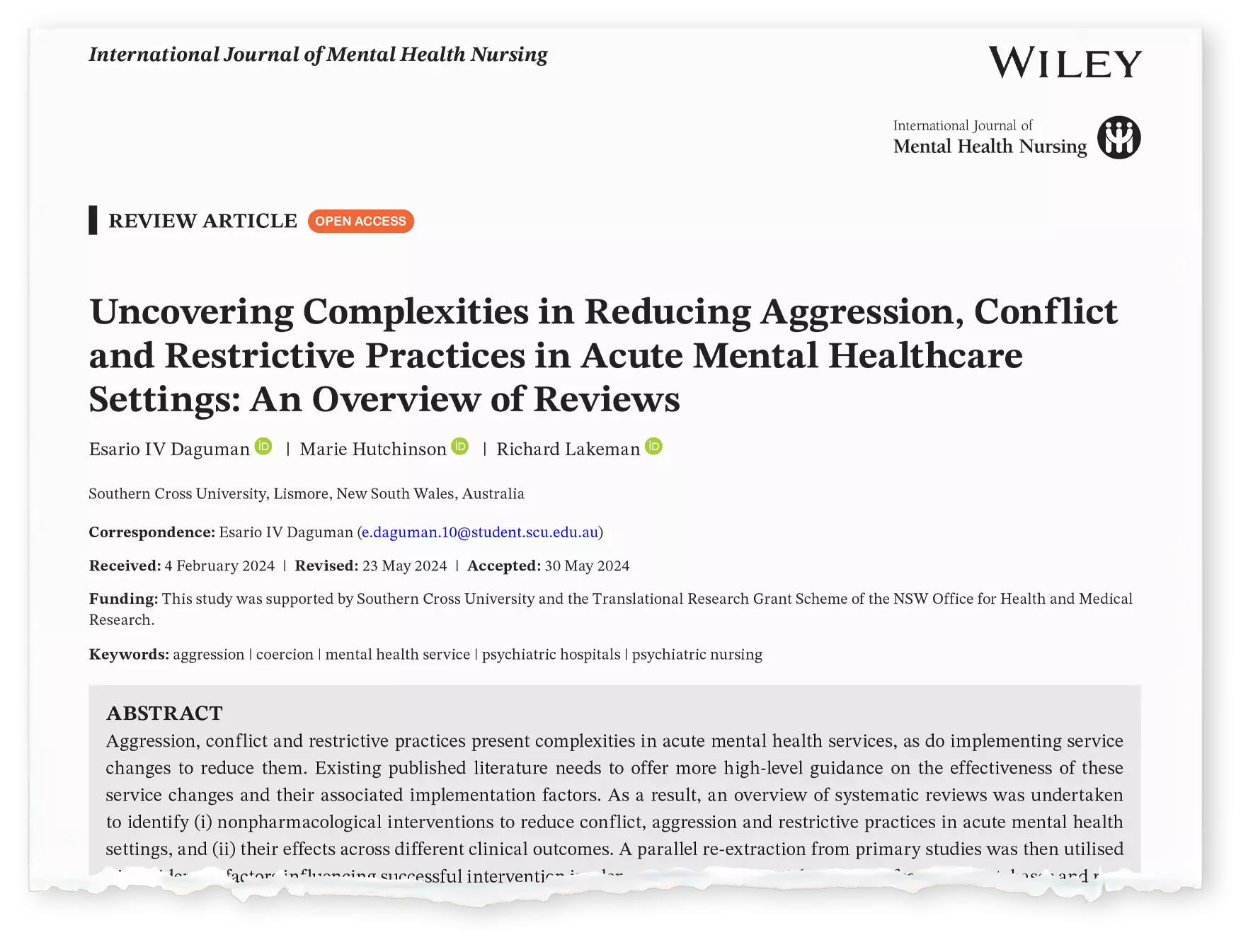
01. Journal article - 22 pages
Uncovering Complexities in Reducing Aggression, Conflict and Restrictive Practices in Acute Mental Healthcare Settings:
An Overview of Reviews
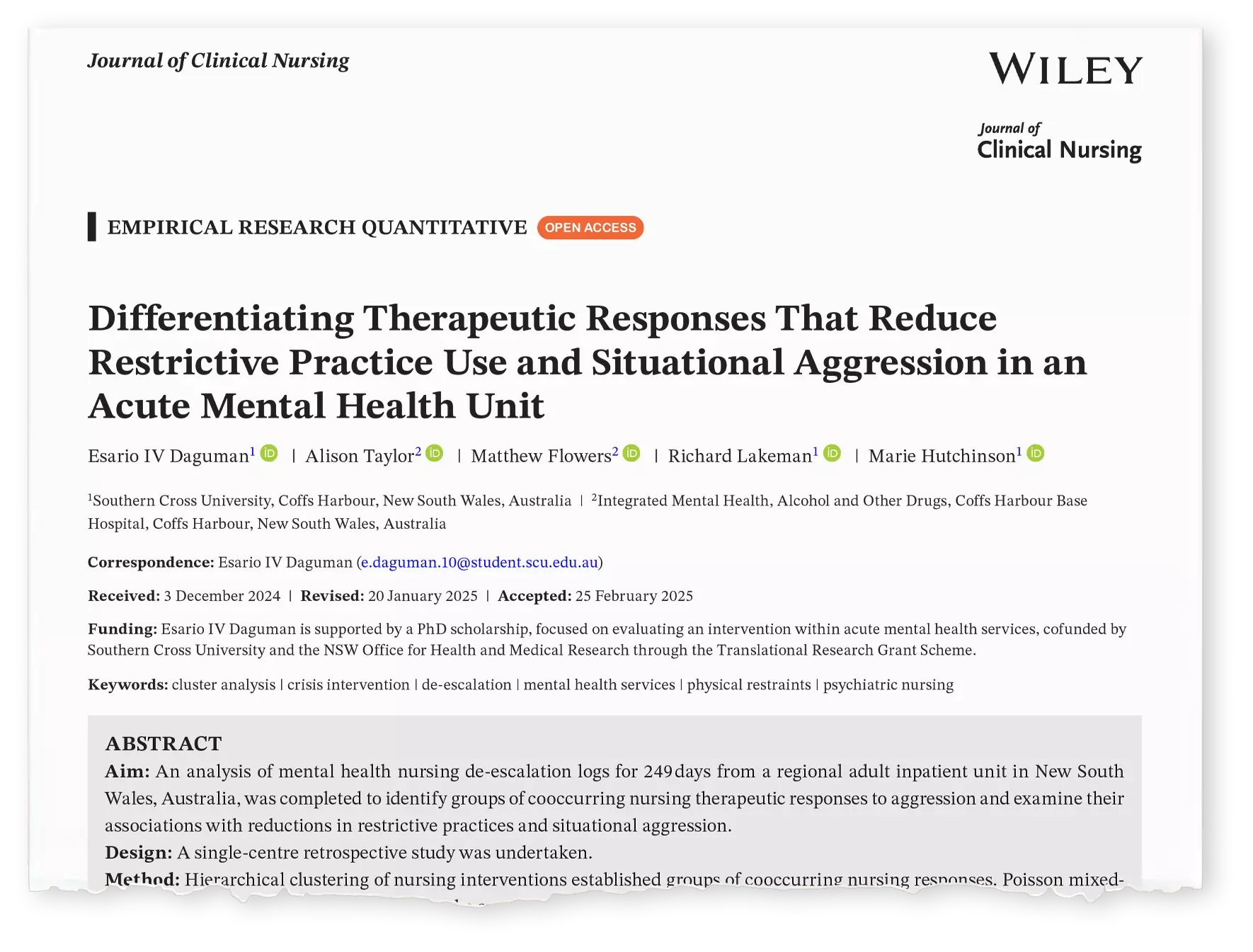
02. Journal article - 13 pages
Differentiating Therapeutic Responses That Reduce Restrictive Practice Use and Situational Aggression in an Acute Mental
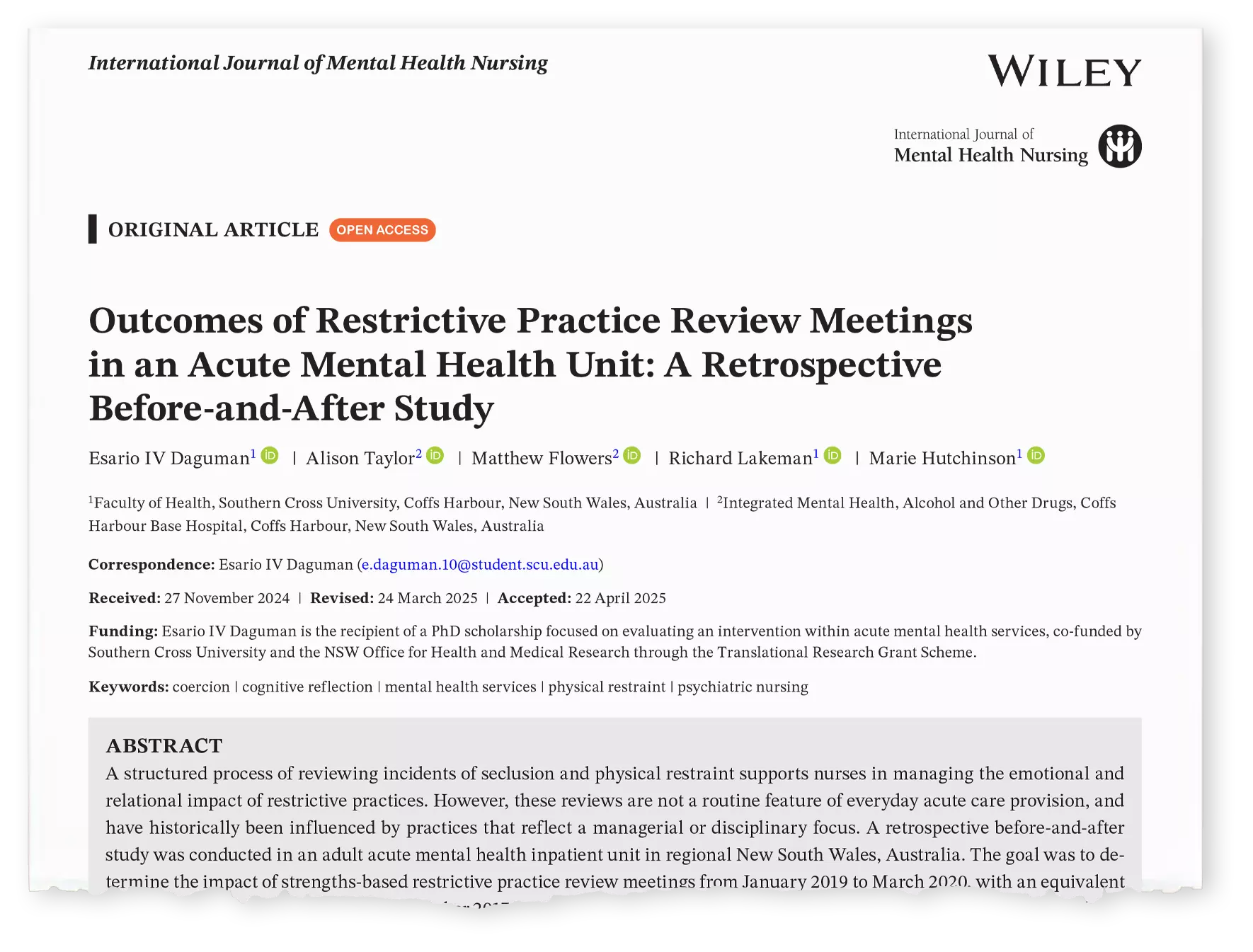
03. Journal article - 10 pages
Outcomes of Restrictive Practice Review Meetings in an Acute Mental Health Unit:
A Retrospective Before-and-After Study
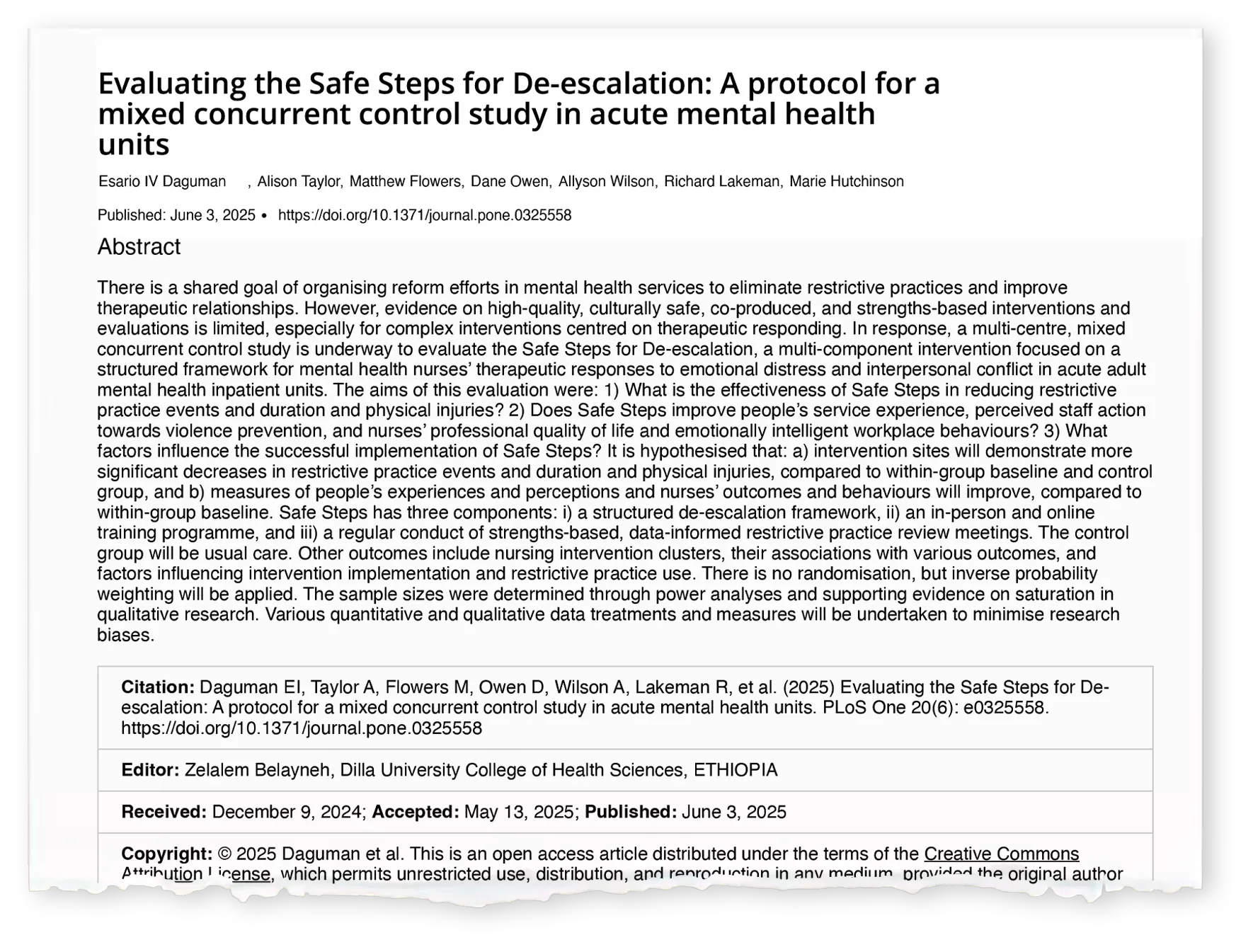
04. Study Protocol - 13 pages
Evaluating the Safe Steps for De-escalation:
A protocol for a mixed concurrent control study in acute mental health units
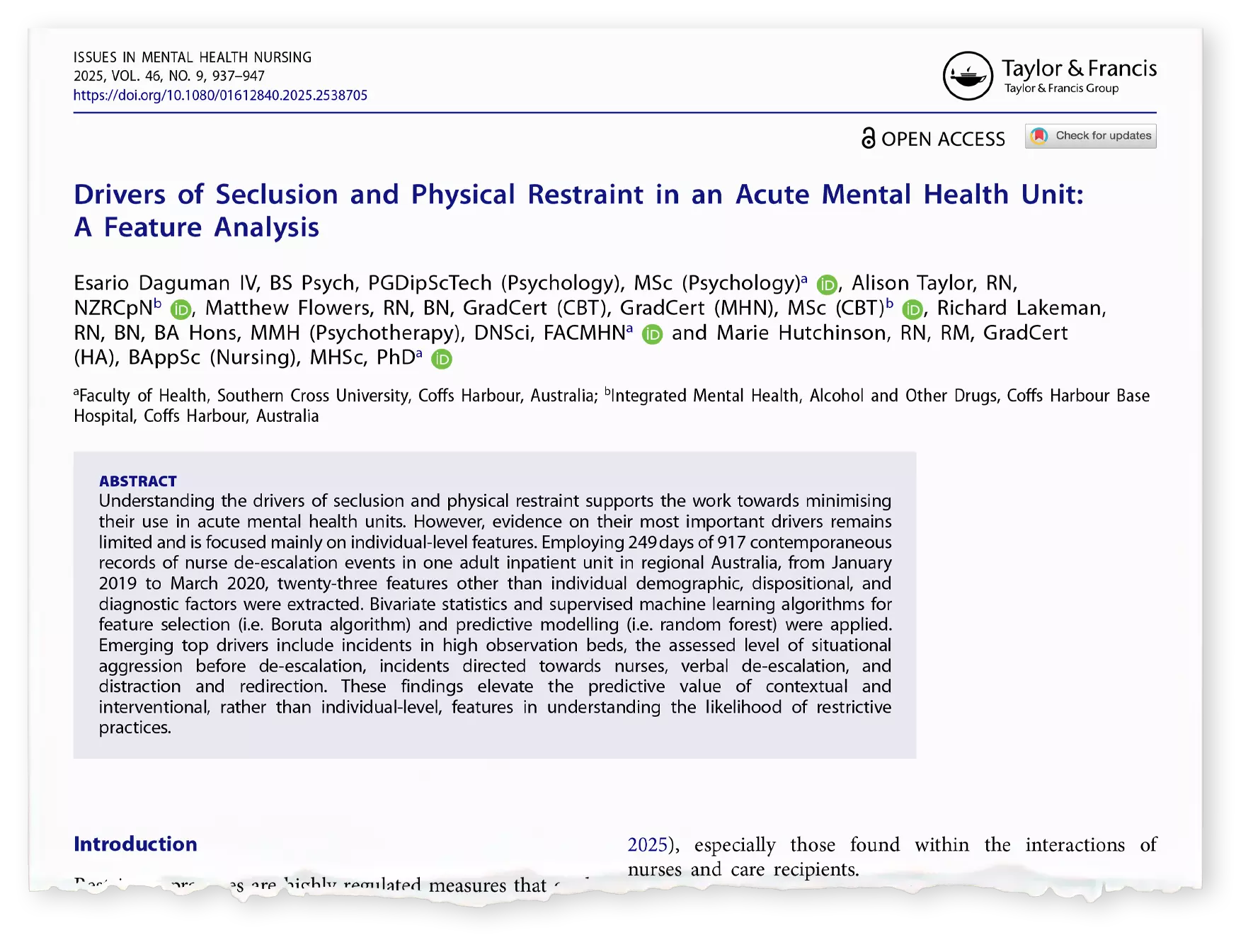
05. Research Article - 11 pages
Drivers of Seclusion and Physical Restraint in an Acute Mental Health Unit: A Feature Analysis
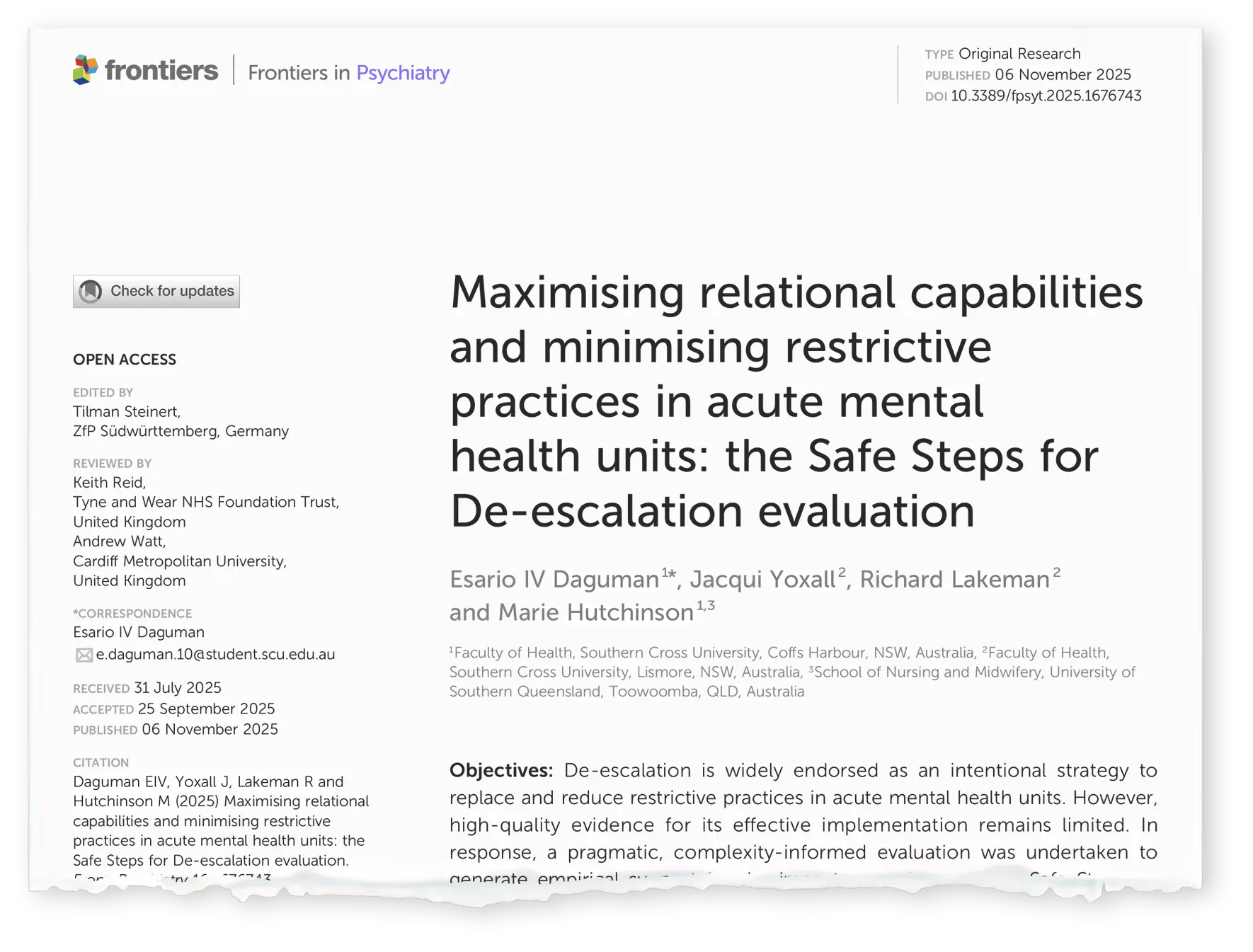
06. RESEARCH article - 16 pages
Maximising relational capabilities and minimising restrictive practices in acute mental health units:
The Safe Steps for De-escalation evaluation
Acknowledgements
This research was supported by a Translational Research Grant from the NSW Health Office of Health and Medical Research, NSW Health, Mid North Coast and Western Sydney Local Health Districts, and Southern Cross University, Faculty of Health.
We acknowledge that seclusion and restraint can mimic past experiences of trauma, oppression, discrimination, racism, and loss. For many, especially Aboriginal and Torres Strait Islander (First Nations) people, people from Culturally and Linguistically Diverse (CALD) backgrounds, and LGBTIQA+ people, these practices can be deeply distressing and cause psychological, spiritual, physical, and emotional injury and harm.
We sincerely acknowledge the lived and living experiences of mental health conditions and those who support them. We acknowledge these ourneys as unique and we were privileged to learn from these experiences in designing the Safe Steps framework and associated training.